Which Should You Choose?
This comparison was carried out in June 2026 using Amazon KDP’s Groundwood paper option available at the time. As Amazon continues to develop its print options, some specifications or features may change in the future.
Since Amazon introduced Groundwood paper as an option for KDP paperbacks, many self-published authors have been wondering whether it’s worth switching from Standard White. I ordered copies of both to compare their feel, readability, print quality, weight and overall appearance.
New Paper Option
If you’re publishing through Amazon KDP, you may have noticed a new option called Groundwood. Amazon says Groundwood paper offers several benefits for both readers and authors:
- A lower carbon footprint.
- Higher opacity, making pages easier to read.
- A textured finish that makes pages easier to turn.
- Fewer CO₂-equivalent emissions than other KDP paper types, with the remaining emissions offset using high-quality carbon credits.
- Lower printing costs than Standard White and Cream paper.
Amazon explains: “Groundwood paper is a lower carbon option perfect for paperback novels and text-heavy books. Because of its higher opacity and textured feel, it makes pages easier to read and turn.”
That sounded promising, but I wanted to see whether it actually made a noticeable difference.
My Amazon KDP Groundwood comparison
Rather than relying on the specifications, I ordered two copies of my novel, The Mereland Chronicles: The Crier.
One was printed on:
- Standard White paper
- Groundwood paper
This allowed me to compare them side by side.
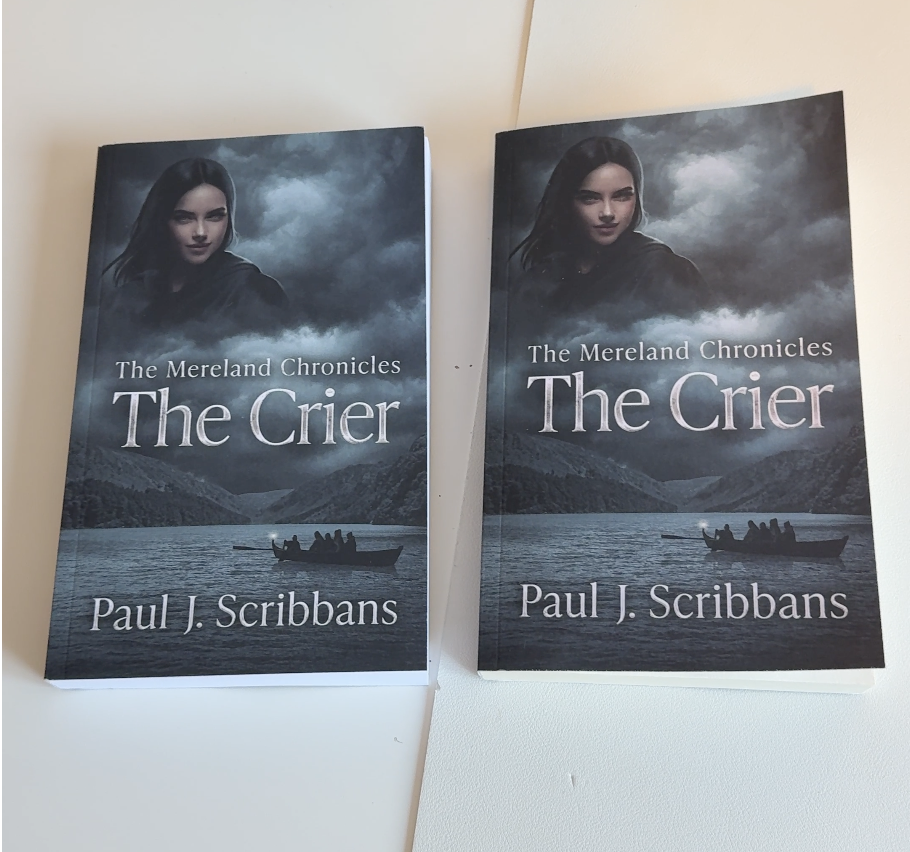
Left: Standard White paper. Right: Groundwood
Page feel
The first thing I noticed was the texture.
Groundwood has a noticeably softer, more tactile feel than Standard White. It feels closer to the paper found in many traditionally published novels, while Standard White feels smoother and slightly more premium.
Whether that’s an advantage comes down to personal preference, but I found Groundwood more pleasant to handle and more natural to read.
Weight
There is also a noticeable difference in weight between the two books.
The Standard White edition weighed 399g.
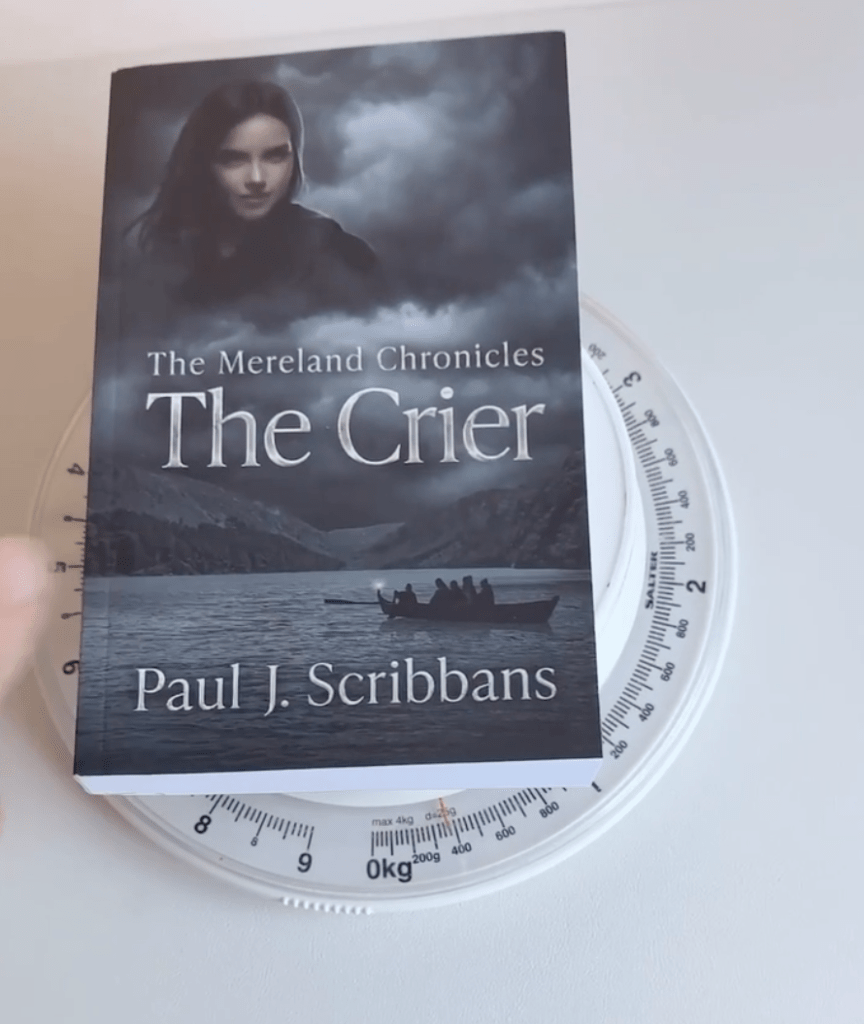
Groundwood weighed 299g, making it 100g lighter than my Standard White.
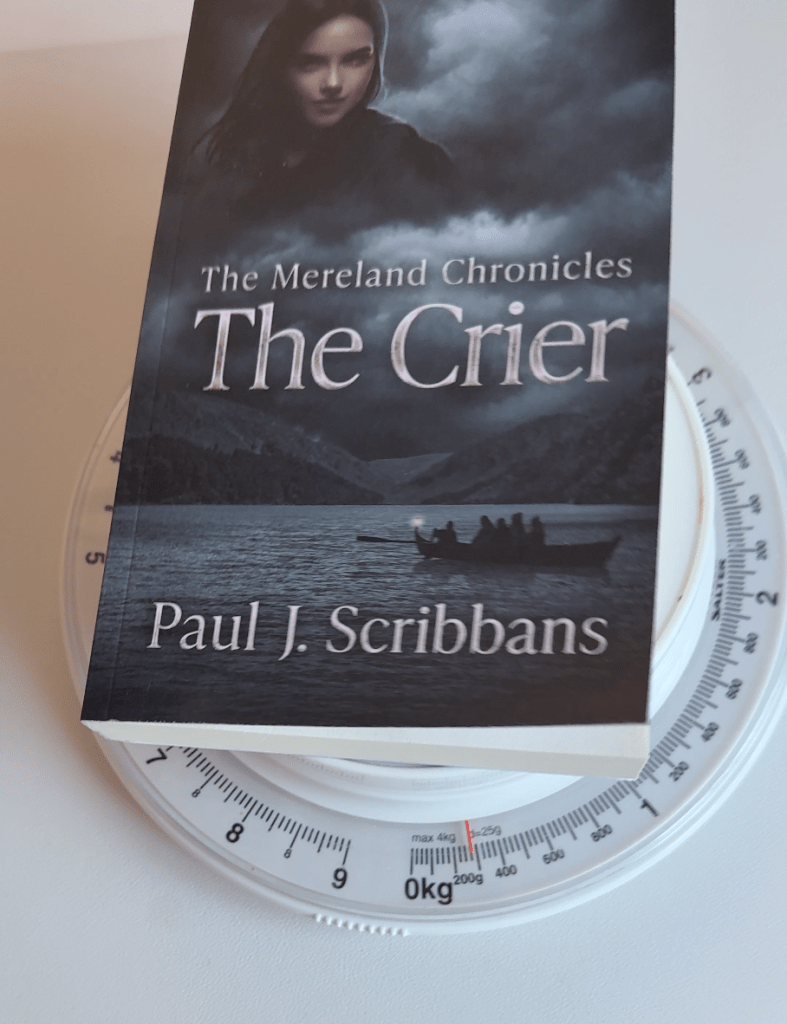
While this won’t matter to everyone, readers who enjoy longer books may appreciate the reduction in weight.
Readability
According to Amazon, the higher opacity of Groundwood paper improves readability. After comparing the two Amazon KDP paper options side by side, I found the Groundwood edition slightly more comfortable to read. The warmer tone gives the pages a familiar feel, similar to many traditionally published paperbacks, while the Standard White paper has a brighter, cleaner appearance.
Again, this comes down to personal preference, but I found myself favouring the Groundwood paper during longer periods of reading.
Heavy ink test
One question I had was how Amazon KDP Groundwood paper performs with heavier ink coverage. Since my novel contains a full-page black-and-white map, it provided a useful real-world test.
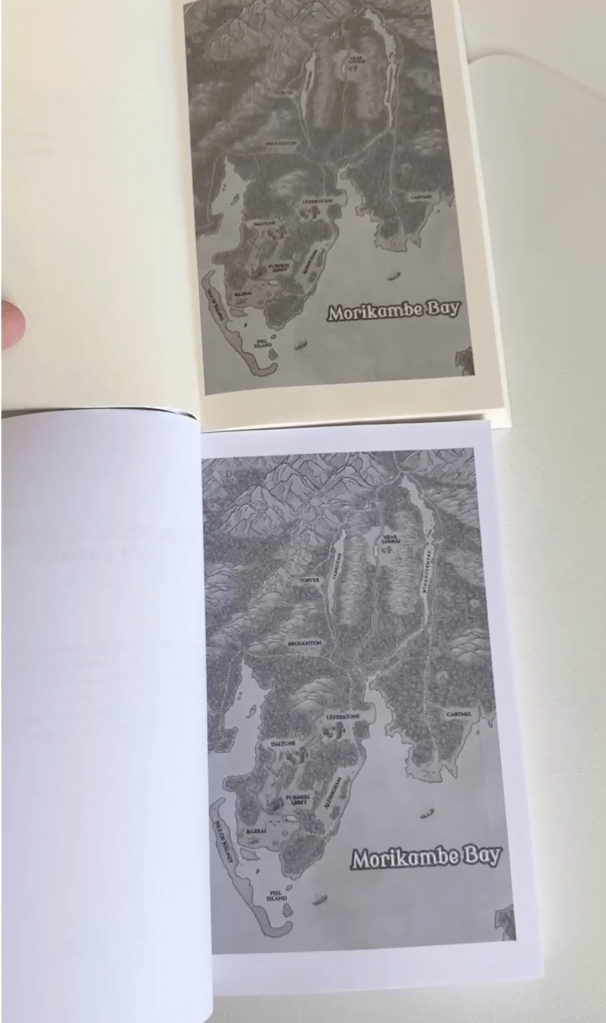
Comparing the two versions side by side, both reproduced the artwork well.
The Groundwood version appeared slightly softer, most likely because of its warmer tone and more absorbent paper surface. However, the difference was subtle, and all of the map details remained clear and easy to read.
If your book contains maps, illustrations or photographs, I’d still recommend ordering a Groundwood proof copy before switching.
Cost and environmental impact
Groundwood offers two practical advantages for authors.
First, according to Amazon, Groundwood printing costs are lower than Standard White and Cream paper. For authors publishing longer novels, those savings can add up over time.
Second, according to Amazon, books printed on Groundwood produce lower CO₂-equivalent emissions, with the remaining emissions offset through high-quality carbon credits.
For many independent authors, those two factors alone make it an attractive option.
My verdict
After comparing both editions, I’ll be using Amazon KDP Groundwood paper for future print copies of The Mereland Chronicles: The Crier.
The softer feel, lower printing costs and environmental benefits make it a compelling choice for paperback novels.
As a small bonus, The Mereland Chronicles series has will have an environmental undercurrent, so choosing a paper with a lower environmental impact feels like a fitting decision.
| Feature | Standard White | Groundwood |
| Feel | Smooth | Softer, textured |
| Colour | Bright white | Warm off-white |
| Weight (my proof copies) | 399g | 299g |
| Reading experience | Crisp | More traditional book-like feel |
| Heavy ink | Slightly sharper | Slightly softer |
| Printing cost | Standard | Lower (according to Amazon) |
| Environmental impact | Standard | Lower CO₂-equivalent emissions (according to Amazon) |
Who should choose Groundwood paper?
Based on my experience, I’d recommend considering Amazon KDP Groundwood paper if you’re publishing:
- Novels
- Memoirs
- Books with few or no illustrations
For most fiction authors, I think Groundwood is well worth considering. The lower printing costs, lighter weight, comfortable reading experience and environmental benefits make it an excellent addition to Amazon KDP’s paper options.
Watch the comparisons
I also recorded two short TikTok videos showing the comparisons.
- Part 1: Standard White vs Groundwood – page feel, weight and readability.
- Part 2: A comparison of heavy ink coverage using the map from The Mereland Chronicles: The Crier.
You can watch both videos here:
TikTok Part 1 – here
TikTok Part 2 – here
This review reflects my personal experience with proof copies of the same paperback printed using Amazon KDP’s Standard White and Groundwood paper options. Your results may vary depending on page count, trim size, interior design and ink coverage.


