History and theory at the Abbey Mill
A brief note on the site today
At the southern end of Furness Abbey, tucked into the Beckansgill Valley, stands the building now known as the Abbey Mill Café. Officially recorded as the Custodian’s Cottage, the structure is generally dated to the Victorian period and is associated with the later management of the abbey ruins rather than their medieval operation.
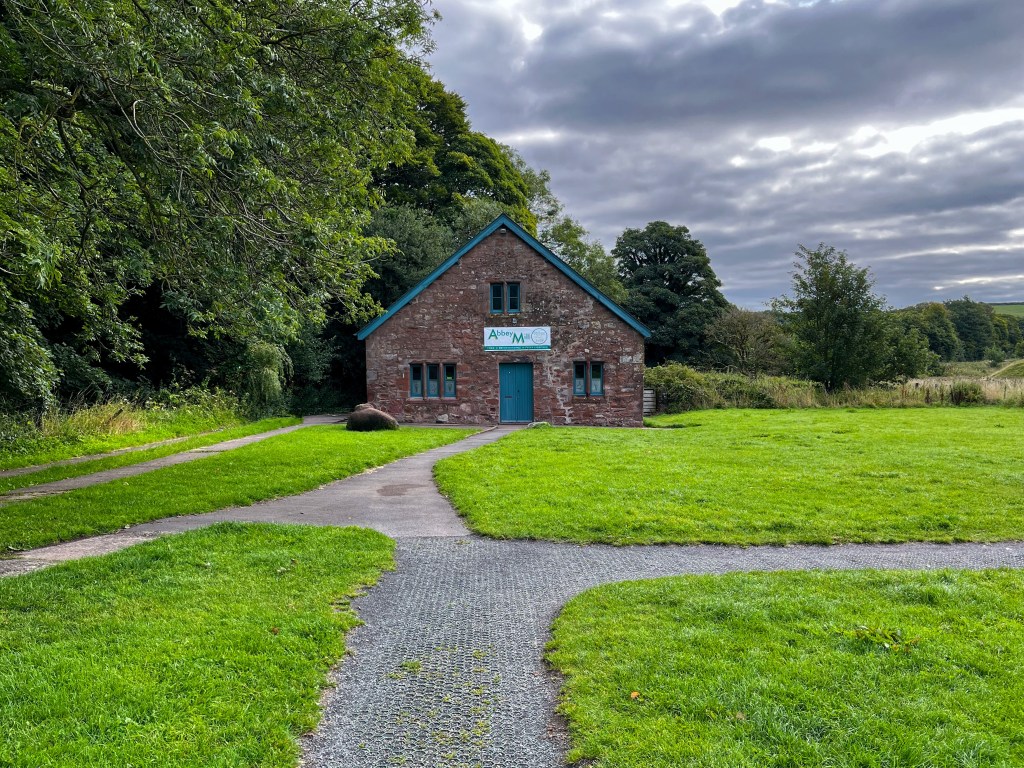
However, its position within the basin, close to Mill Beck and what some believe were fishponds, has long prompted speculation that the building may sit on, or incorporate, earlier foundations. Over time, changes to water flow, repeated flooding, and the gradual build-up of silt altered ground levels across the valley floor. These processes unfolded over well in excess of four centuries, from the Abbey’s destruction in 1537 through to modern times. Later railway construction further reshaped the landscape, compounding these effects. Together, these changes may have buried earlier features rather than removed them entirely.
There is no firm archaeological proof that the building was once a medieval watermill. What exists instead is a persistent and intriguing possibility.
It is that possibility which The Mereland Chronicles: The Crier explores.
From café to mill
If you have visited the Abbey Mill at the end of the Vale of Nightshade, also known as Beckansgill Valley, you will know it as a welcoming sandstone building. Set just a stone’s throw from the southern end of Furness Abbey, it is now home to the much-loved Abbey Mill Café.
It is a place of coffee, cake, ice cream, conversation, and a pause after walking the abbey grounds. It is also, quietly, one of the places that helped give shape to The Mereland Chronicles: The Crier.
In the novel, however, the building is allowed to be something else. Something that has long been rumoured, but never actually proven.
This post explores that difference. What follows is not a claim of historical certainty, nor an attempt to rewrite the Abbey’s archaeology. It is an interpretation, a fictional reconstruction rooted in a long-circulated local theory, shaped by landscape, and expanded for the purposes of story.
The Custodian’s Cottage at Furness Abbey is often described as Victorian, and on paper that is correct. Yet for many years there has been a persistent idea that the structure predates that period, and that what we see today is not the whole building.
The theory is simple and compelling. The cottage may once have stood three storeys high and functioned as a watermill. After the Abbey’s destruction in 1537, repeated flooding deposited silt into the basin. Over time, ponds were filled in, ground levels rose, and what had once been the mill’s lower storey disappeared beneath the surface. Later railway construction through the valley only compounded that change. If the theory holds, the present doors and paths align not with the original ground floor, but somewhere above it.
Whether that interpretation is correct is almost beside the point. What matters is that the idea fits the site uncannily well. It is easy to imagine water once churning past the walls, at a time when Mill Beck was likely far more powerful, before the construction of the railway embankments.
How the mill appears in The Crier
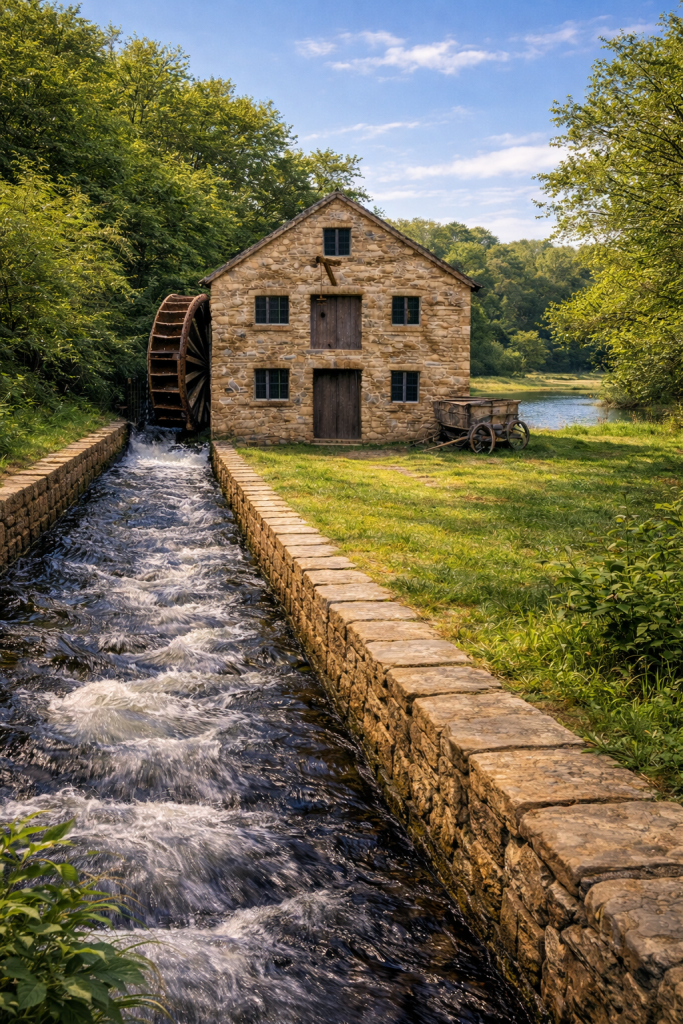
Within the world of The Mereland Chronicles: The Crier, the building is treated as a working watermill during the medieval period. It stands lower in the basin, with the ground cut back to the level of the stream. A wheel sits tight against the stonework, fed by a managed and focused flow of water. Behind it lie the fishponds, controlled and deliberate rather than ornamental.
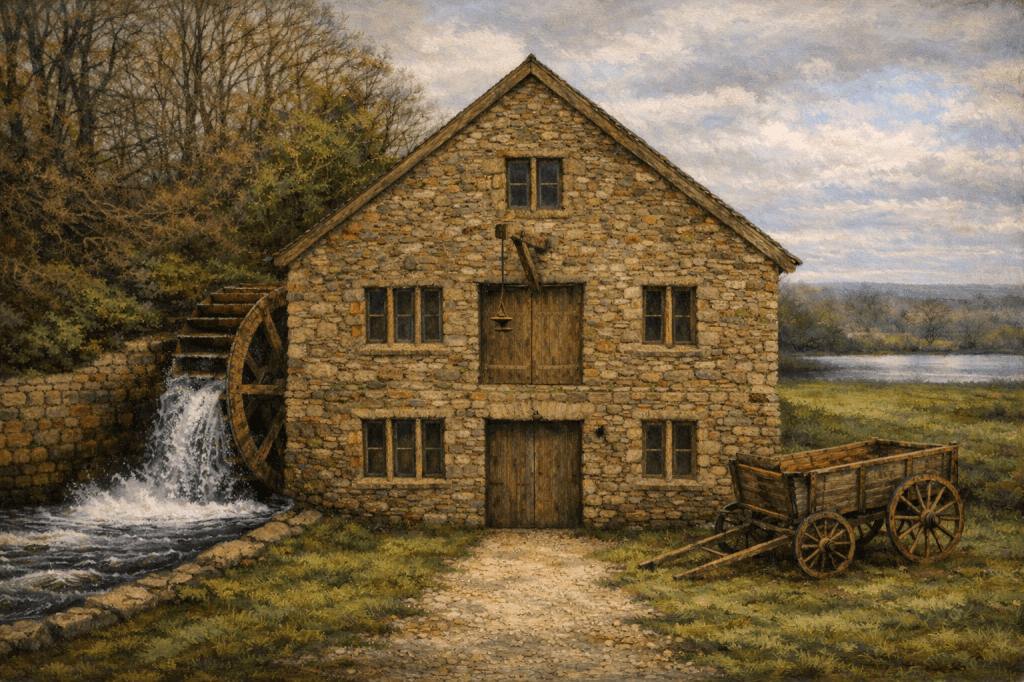
(AI generated image)
This imagined mill is not grand. It is functional, heavy, and integral to abbey life. Grain is processed there. Water is directed there. The building works because the landscape allows it.
By the time the story reaches the present day, that older structure has been almost entirely erased. Only the upper portion remains visible. Doors have been cut where they make sense now, not where they once did. The past survives as rumour and suggestion rather than proof.
That tension between what is seen and what might have been runs throughout the novel, and in fact the entire Mereland series.
Fiction built from place
One of the core aims of The Crier was to let real locations carry narrative weight without pretending they have fixed meanings. The mill, in particular, becomes a quiet example of how history can be layered, buried, and misremembered.
The café scene in the novel leans into that idea. The character visits the Abbey Café for something as ordinary as coffee and honey buns yet finds themselves drawn to the building itself. Its proportions feel wrong. Its position feels deliberate.
That response mirrors my own experience of the site.
Acknowledgement and thanks
The Abbey Mill Café is a warm, welcoming place, run by people who were consistently supportive while I was developing my novel.
If you are reading this after visiting the café, consider this post an invitation rather than an explanation. An invitation to look again at the building as you leave. To imagine where the ground might once have been. To picture water moving where grass now lies.
If you have never visited the Abbey Mill Café, it is well worth doing so if you are passing. You may even see me there, laptop open at the corner table, working on the latest instalment of The Mereland Chronicles, with a steaming hot coffee to hand.
For opening times and visitor information, see:
www.abbeymillcafe.co.uk
Discover the story behind the Abbey Mill in The Mereland Chronicles: The Crier. Click here to buy.
 Paul J. Scribbans - Author