As October deepens and the days grow colder, it seems fitting that Halloween will fall a couple of weeks after the launch of The Mereland Chronicles: The Crier, on the 16th October.
I’d like to claim this was very clever timing on my part. But it wasn’t, more a lucky coincidence caused by delays in editing and final polishing of the book, which pushed the schedule nicely toward the spooky season. 👻
Why is this accidental timing so good? Because the legend of the Claife Crier, also known as the Crier of Claife, is a great Halloween story. And because The Mereland Chronicles: The Crier acts as a prequel to this chilling tale, it’s turned out to be perfect timing.
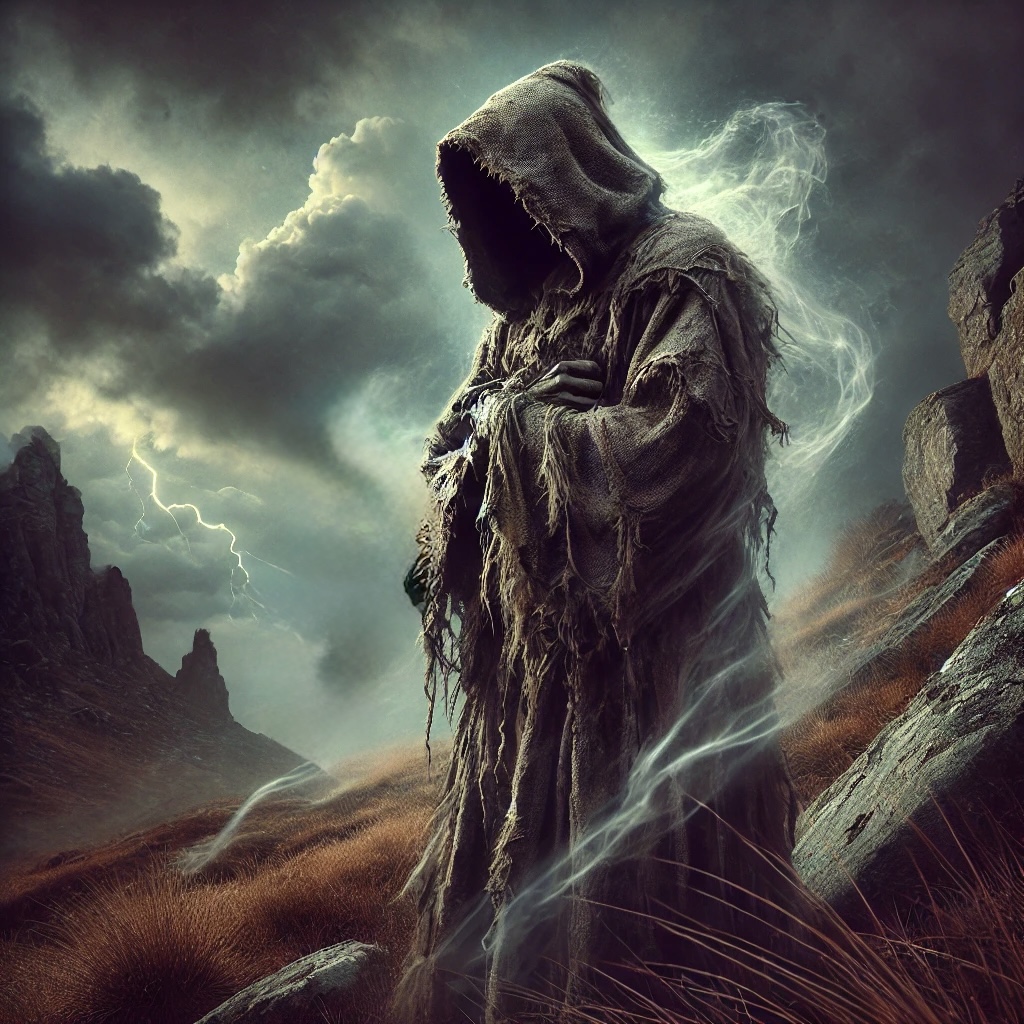
The Crier of Claife legend tells of an eerie ghostly cry that calls across Windermere in the Lake District, summoning the ferry from the Nab, but no passenger ever waits on the far shore. There are different versions of the story written in the 1800s, which I touched on in my recent Monsters and Medieval England – A Look at Lake District Ghosts & Beasties post, but I thought it interesting to delve further into the source if these creepy tales.
Historical Versions of the Claife Crier
Kendal Mercury (1852): “A Christmas Ghost Story for Country Firesides”
The earliest known written version of the Claife Crier legend appeared in the Kendal Mercury in 1852, penned by “Snow Drop.”
The article combines Lake District history and folklore in a classic Victorian Christmas tale. It recounts a stormy night near St Martin’s Day (Martinmas) when a ferry boatman heard a mysterious call from the Ferry Nab. He rowed into the darkness, returned alone, “white as a sheet,” and died soon after without revealing what he had seen. From that night onward, cries echoed across Windermere whenever the wind rose from the west. Those who have read The Mereland Chronicles will hopefully be able to guess at the chapter this occurs in.

The haunting’s climax comes when a Cistercian monk from Furness Abbey performs an exorcism on Christmas Day, confining the spirit within a quarry on Claife Heights. The story includes some eerie scenes: foxhounds that halt mid-chase and a schoolmaster from Colthouse who disappears after daring to pass the quarry after dark.
(Source: “The Crier of Claife: A Christmas Ghost Story for Country Firesides,” by Snow Drop, Kendal Mercury, 1852.)
Slight spoiler alert: In an earlier version of The Mereland Chronicles, I did actually add a chapter around the exorcism involving a certain character (if you’ve read the book, you can guess who). However, I decided not to include it in the final narrative. The schoolmaster also appeared in an early version of my book. In fact, this was a significant part of the narrative. But again, it went into an “off-cuts” archive because it didn’t fit my planned story arc.

Harriet Martineau (1855): A Complete Guide to the English Lakes
Three years later, Harriet Martineau included the story in her Guide to the English Lakes. Her version keeps the same structure – the call across Windermere, the terrified boatman, and the monk’s exorcism – but presents it as part of Lake District folklore.
She records that locals placed the haunting at the quarry behind the Ferry House, a site still known in her time as “The Crier of Claife.”
I have personally explored the area during the day (not at night, I should clarify). Although overgrown, I have come across several old quarries, noticeable from the deep gouges in the hillside. It’s possible that one of these could be the resting place of our ghost.
(Source: Harriet Martineau, A Complete Guide to the English Lakes, London: George Routledge & Co., 1855, pp. 30 – 32.)
Folklore and Later Tellings
Other writers and local historians have kept the story alive in different ways.
- Esmeralda’s Cumbrian History & Folklore suggests the Crier was a heartbroken monk from Furness Abbey and notes he may be the only ghost named on an Ordnance Survey map; facts I pick up on in my book.
- Lake District Letters traces the story’s print history and confirms the Kendal Mercury edition of December 1852 as its first publication.
- Old Corpse Road and Arcus Atlantis retell versions where the haunting ties to Lady Holme or a doomed love story.
Each version adds new colour but preserves the same haunting call across Windermere, a voice that belongs to both lake and legend. My novel brings some of these elements together and adds my own twist to the legend, breathing new life into it and [SPOILER ALERT] transporting elements of it into the future.
Reflection
What I love about the Claife Crier story is the mystery, sense of loss and sorrow. And this is the precise reason I wanted to explore it further in The Mereland Chronicles: The Crier.
When writing the novel, I didn’t just read the legend. I listened to it. It’s a haunting reminder that places hold memory. Is the pain of sorrow and heartbreak ever truly dissolved by time?
References & Acknowledgements
Primary Historical Sources
- Snow Drop (1852): “The Crier of Claife: A Christmas Ghost Story for Country Firesides.” Kendal Mercury.
- Martineau, Harriet (1855): A Complete Guide to the English Lakes. London: George Routledge & Co., pp. 30–32.
Additional Reading
- Esmeralda’s Cumbrian History & Folklore: “The Claife Crier: Windermere’s famous spook”
- Lake District Letters: “The Crier of Claife revisited”
- Old Corpse Road: “The Crier of Claiffe”
- Arcus Atlantis: “The Wauler by the Lake”
- Visit Cumbria: Windermere Ferry Information
More About the Claife Crier | FAQ
Q1: Who or what is the Claife Crier (Crier of Claife)?
A: The Claife Crier is the name given to a ghostly wailing or call that echoes across Windermere’s western shore (Claife Heights), said to summon a ferry across the lake. It is often said to be a spirit confined in an old quarry.
Q2: Why is the Claife Crier sometimes called the “only ghost on an OS map”?
A: Because “Crier of Claife” is actually marked on some Ordnance Survey (OS) maps as a geographic feature, making it one of the very few (if not the only) spectral names enshrined on a topographic map.
Q3: What version or earliest written account of the Claife Crier exists?
A: The earliest known written version is from the Kendal Mercury on Christmas Day 1852, titled “The Crier of Claife: A Christmas Ghost Story for Country Firesides,” signed “Snow Drop.”
Harriet Martineau later included a version in A Complete Guide to the English Lakes (1855).
Q4: What is the origin or backstory of this ghost legend?
A: There are a few variations: one says the spirit was a monk from Furness Abbey who fell in forbidden love and died in remorse. Another suggests the cries may simply be wind or natural phenomena amplified by the topography of the hills and valleys around Windermere. Some local accounts tie the story to a quarry on Claife Heights and a dark night when a ferryman responded to a phantom call and later died or went mad.
My story takes elements from many of these sources to create a new backstory to the ghostly tale.
Q5: Has anyone claimed to hear the Claife Crier in modern times?
A: While there are occasional reports from walkers of strange wailing or unsettling sounds near Claife Heights, none have been confirmed with strong evidence. Some local historians argue the “cry” could be an echo of wind through woods or creaking ice.
Q6: Where is the quarry associated with the Claife Crier located?
A: The legend places the ghost in a disused quarry on Claife Heights (on the western side of Windermere). Some versions link it with old slate quarries or rock cuttings behind the Ferry Nab route.
Q7: Can I visit the “haunted spot” or quarry today?
A: Yes, you can hike through Claife Heights and explore old quarry remnants. But be cautious: trails may be overgrown or unmarked, and there’s no official “ghost tour”.
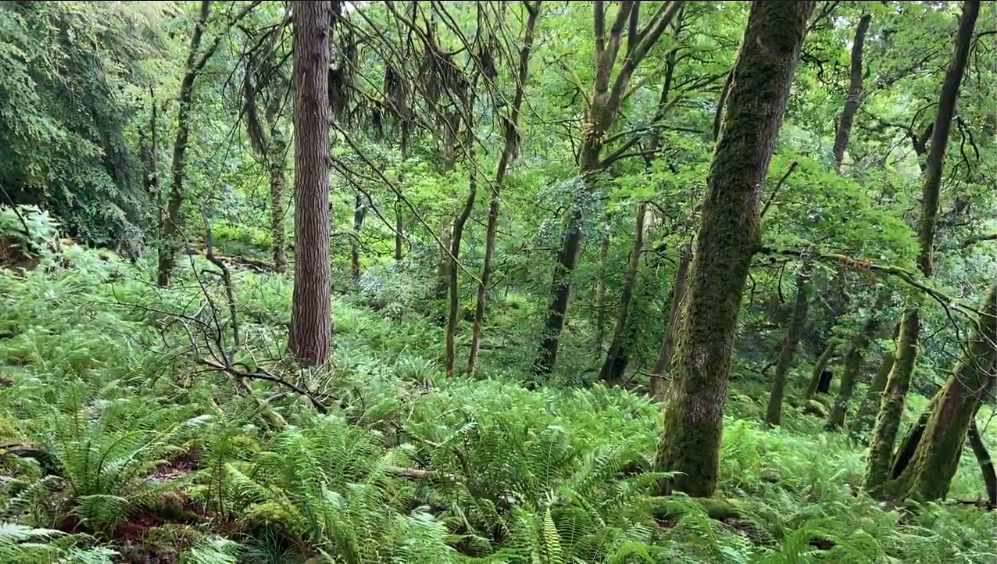
I have visited the area marked on the Ordnance Survey; it’s a steep, wooded incline, with no path so I wouldn’t recommend a trip to the exact spot.
Q8: Why do some researchers doubt the supernatural origin?
A: Some scholars suggest the legend is Victorian embellishment layering over natural phenomena: the wind through trees, ice cracks, echoes across the lake. Also, the folklore was first published relatively late (mid-19th century), which casts doubt on deep antiquity.
FAQ Sources and Further Reading
Arcus Atlantis – “Spooky Lancashire: The Crier of Claife.”
https://www.arcus-atlantis.org.uk/spooky-lancashire/crier-of-claife.html
(Background on the legend’s setting, quarry references, and local folklore variations.)
Lake District Letters Blog – “The Crier of Claife Revisited.”
https://lakedistrictletters.blogspot.com/2017/04/the-crier-of-claife-revisited.html
(Discusses the 1852 Kendal Mercury story, Martineau’s retelling, and the OS map reference.)
Esmeralda’s Cumbrian History & Folklore – “The Crier of Claife.”
https://esmeraldamac.wordpress.com/2011/05/20/the-claife-crier-windermeres-famous-spook/
(Summarises the legend, its variations, and the National Trust site notes.)
Internet Archive – A Complete Guide to the English Lakes by Harriet Martineau (1855).
https://archive.org/details/cu31924103707737
(Contains one of the earliest printed retellings of the Claife Crier ghost story.)
National Trust – “Claife Viewing Station and Windermere West Shore.”
https://www.nationaltrust.org.uk/visit/lake-district/claife-viewing-station-and-windermere-west-shore
Author’s Note
Research and commentary by Paul J. Scribbans, author of The Mereland Chronicles: The Crier (2025). All historical texts quoted are public domain and credited to their original authors (see sources and references within this blog post).
 Paul J. Scribbans - Author