Some people write full time. I write at sunrise and sunset, and in stolen moments at weekends.
That’s the reality when you have a full-time job and a story that refuses to leave you alone.
I work in IT. In previous roles I’ve written code, built very successful systems for automating workflows and wrangling logic. My first programming gig was when I was about thirteen, writing a ZX Spectrum game to help children with learning difficulties, a program creatively named “Owl Maths”. Yes, I know, not the most inspiring come and play me title, but it had the desired effect, using the stick-and-carrot approach to help children learn while playing.
It’s worth noting that my “Owl Maths” game bears no relation to any other existing product or brand. It was a self-made concept that had its day many years ago.
I do miss those early, innocent days of computing. And yes, those rubber keys did take some getting used to..
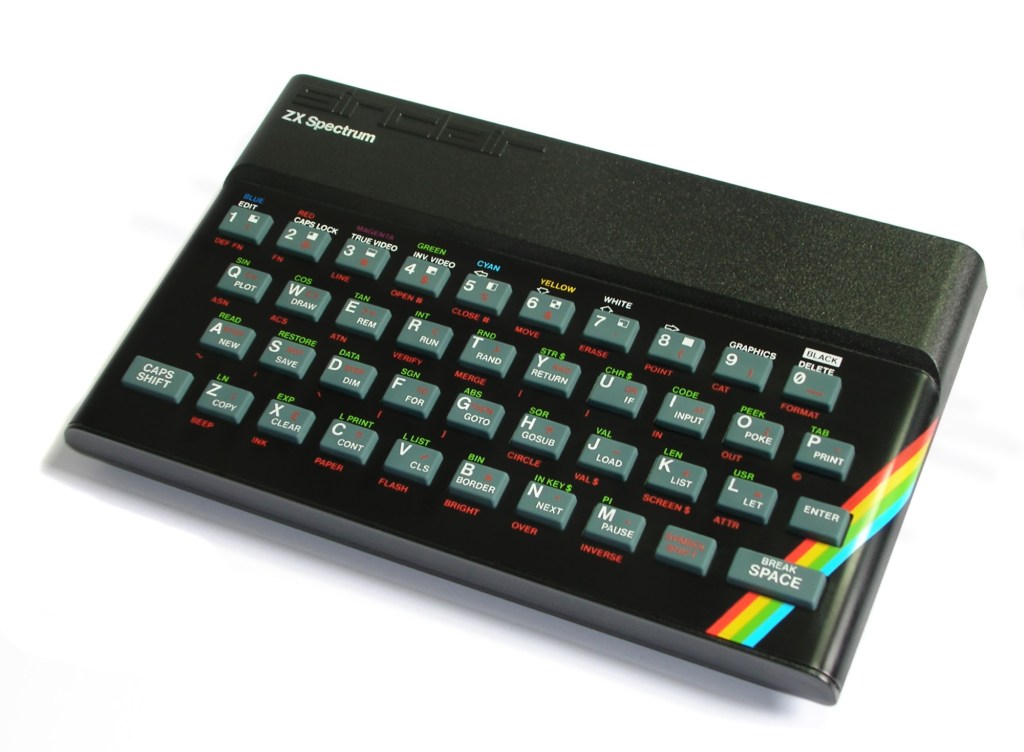
As I’ve mentioned in a recent blog post, my childhood wasn’t what you’d call ‘traditional’. Between being buried in nature and undergrowth to being buried in machine code (there weren’t many compilers in those days). At least it passed the time and taught me resilience, resourcefulness, and how to take care of myself outside structure, without relying on others. I’d spend hours hand-coding Z80 assembly: CALLs, PUSH, POPs, PEEKs. Poking values into RAM, losing bits and bytes along the way. That was my playground. Sad, I know, but as I’ve said before, that was me.
One thing I’ve come to realise since turning my creativity to fiction: computer programming and writing share the same DNA.
Stay with me on this!
Writing, like programming, is about structure. You start with raw material: an idea, its characters, settings, fragments of dialogue, outline. Then you arrange these components. A good algorithm solves a problem efficiently. A good story draws you in and carries you line by line, then sets you down cleanly at the end, flowing the strands of logic. In both, the wrong order ruins everything – the program crashes. Computer says No!
The Novel That Wouldn’t Rush
I thought I’d write The Mereland Chronicles in a year. That was more than six years ago.
Life had other plans. Between work deadlines and real-world responsibilities, the story had to wait its turn for my time. The delays taught me to be patient, to go deeper, to rewrite rather than rush.
My novel, The Mereland Chronicles: The Crier, is a dark historical fantasy set in a fictionalised Lake District, inspired by old ghost stories that cling to the fells like a beacon (metaphor intended). It follows a monk named Henry, whose orderly world begins to unravel when soldiers bring a strange girl with no memory into his care. There are secrets. There is adventure, in more ways than one. And beneath it all, something ancient stirs.
Finding Flow in a Fractured Routine
Writing around a full-time job is a lesson in finding flow in broken time. Some days it’s an early-morning sprint before work. Others, it’s a few lines dictated into my phone while walking at lunch. But mostly it’s long evenings when my creative juices are already close to empty.

Entire scenes began as notes in my head while I was coding and automating a metadata system for stock photos in Perl.
Planning. Outlining. Breaking complex problems, or plots, into manageable chunks. Testing and revising. Debugging the story until it holds together.
When the Data Doesn’t Fit
Of course, writing isn’t code, or is it? There’s no compiler for emotional truth. Sometimes what looks logical on the page reads hollow. That’s when instinct and re-reading matter. Often the best thing I can do is stop, walk away, and pick it up tomorrow.
Syntax, Stories and Swapping Skills
As brushed upon within The Crier, and if you get it, you get it, syntax is key.
Why and how? No spoilers here 🙂
I wonder: if you took the mind of a programmer and gave them the basic experience to write a novel, would their logical training help them shape a fantastic story?

Likewise, if you suddenly uploaded [you’ve seen The Matrix, right?] the concepts of coding into a writer, would the story-structuring instincts, the ability to spot and fix loopholes, and the habit of tying up stray ends they’ve honed over years of storytelling help them write fantastically creative and effective code? It’s an exchange I think about often; how the disciplines reflect one another more than most expect.
The Ending You Can Build Towards
So I keep going: early, late and in the margins. Stone by stone. Line by line. Writing words and code taught me patience. Algorithms taught me that clear steps get you there. Experience has taught me that patient work lasts.
If you are a coder and I’ve put a seed in your mind, read more of my blog where I’ve documented my journey from coder to writer.
📖 The Mereland Chronicles: The Crier will be available on Amazon on 16 October 2025, with pre-orders opening a few weeks earlier.
Stick around for updates, behind-the-scenes posts and more from the world of Mereland.
– Scrib
 Paul J. Scribbans - Author