Early in my writing journey, the one thing that phased me for a long time was getting my stories started and translating the ideas in my head into written text. It sounds like it should be easy, but it can be a challenge for the uninitiated.

If you’ve already got the story idea, then that’s the hard part done? Right?
Not necessarily!
Since my early teens, my story had rattled around in my head. When I got to my mid-thirties, I decided to write it down, assuming it would be easy. I mean, I’d played the scene over and over in my head – so translating it into spoken words would be easy. Right?
But here’s the thing; when I tried to write it, nothing happened – absolutely nothing! The narrative in my head simply didn’t convert to written text. It was like starting a car with a flat battery; the car was there fully fuelled, but I just couldn’t get it going. Years passed, and my imagination continued to develop the story, which made me increasingly frustrated; it felt like I just needed to get it out. I had the vision, why couldn’t I write it?

This continued until my forties, then one day, I thought OK enough is enough! I’m going to learn how to do this! So, I booked myself onto a twelve-week creative writing evening course, happy in the fact that I’d potentially resolved my little problem. This, for me, turned out to be a great idea in one aspect but didn’t have the desired effect overall. I really enjoyed interacting with people who shared my ambition for writing and who were beginning their own writing journeys. I’d finally met people on my level, that I could converse with about writing, without getting strange looks. Over several years, I took a number of these classes, made some great friends, and learnt the art and homed my skills.

Problem solved right? Wrong!
Armed with my new knowledge and tools, I sat down to write my novel, I got further, but I still couldn’t get past the first few paragraphs. This time the engine turned, but it just didn’t kick over and came to a spluttering halt! I bought books, read Bloggs (like this one), but nothing helped.
“It took me a long time to lean that I was concentrating too hard on how others did it. I needed to find a way of working that I was comfortable with, and most importantly learn that a first draft is supposed to be a rough and unpolished mess.”
Then one day, after spending a few weeks away from work on a holiday, I had an epiphany! You see, at work, I’m lucky to use my creative spark, but the downside is it leaves me drained at the end of the day, like the oil in a well, tapped and piped away to benefit others. On holiday the usual stresses of life and work melt away within a day or so; the tapped oil is released for me to use for myself. So in previous years, I took a laptop on holiday to write. But I still kept hitting the same old momentum problem. I used to come home after my break feeling disappointed at the lack of progress and ready to give up. The story was destined to stay in my head.

However, this year was different. Instead of taking my laptop, I just threw a notepad and pencil into my suitcase, just in case something happened. This took the pressure off me, as I didn’t need to worry about keeping the tech charged or worrying whether it would be stolen and get dropped in the pool. I arrived at the resort, and after a few days, as expected, my untapped creativity blossomed; ideas started bubbling to the surface. I needed to capture them before they were lost, so I set aside two hours each day in the late afternoon. Finding a quiet place in the hotel lounge, armed with my pad, pencil, and a cup of coffee, sat and scribbled on the notepad. Now, to my surprise, this worked instantly. I initially managed to translate the story timeline and framework in my head and draw out scenes and events – easy using pencil and paper, and, as I realised, not so easy on a laptop. After a relatively short period, the basic structure was in place.
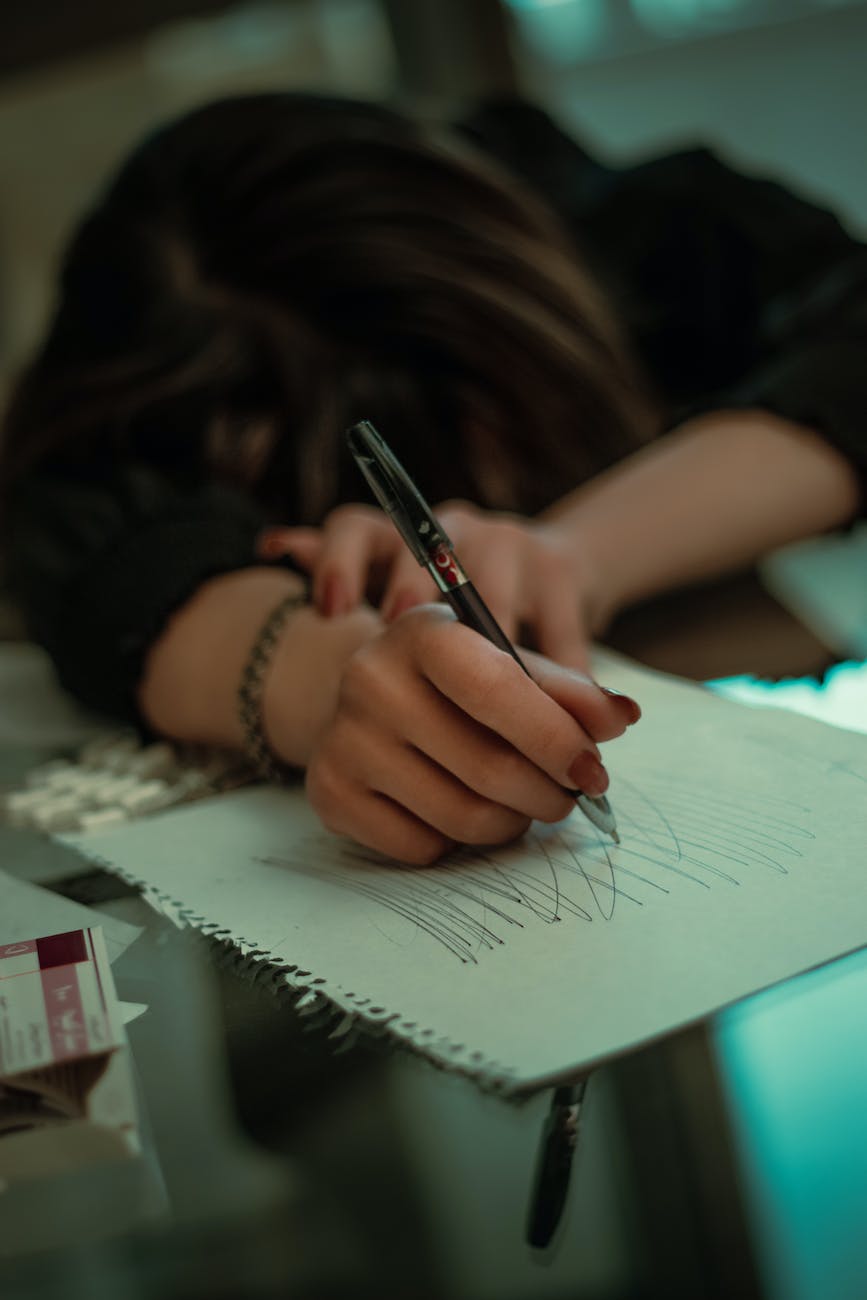
Fantastic! I could visually see the story layout and timeline, adjust and add to it easily. Using this framework, I was then ready to start writing rough scenes based on structure. By the end of the holiday, I had filled in many pages of scribbled text, complete with rough drawings, diagrams, maps and scenes. I had it, the story framework for the first time. Once I returned home, I then used this to type up the first draft over the next few months. I realised that I didn’t need to get it perfect on the first pass and working out the plot on paper gave me something to work from.
Nearly all authors will tell you that they do many written drafts, and the first one is ALWAYS a basic brain dump. This first draft should NEVER be edited, polished and checked. Just allow the story to flow from your mind onto the page. Once the first draft is completed, then do a second, third, fourth, fifth edit – as many as it takes. Trying to edit the story as it first emerges onto the page, is a recipe for disaster, and will block the natural flow of your creativity; it’ll never grow.

The summary of this little yarn – that took me a long time to lean – is that I was concentrating too hard on the story being perfect from the get-go. I needed to find a way of working that I was comfortable with, and most importantly learnt that a first draft is supposed to be a rough and dirty.

In the past, I had been editing the story as I wrote it. Trying to perfect each sentance as soon as it was written. It seems so obvious now why I failed back then. Like a sculptor, I was trying to perfect the left ear before the rest of the head was worked out. How could the sculptor possibly work out the ears scale, orientation and position without the nose, eyes, mouth, chin, hairline and the right ear roughly defined first? It took me many years to understand this, and I hope this help you.
Take care,
– Scrib
 Paul J. Scribbans - Author