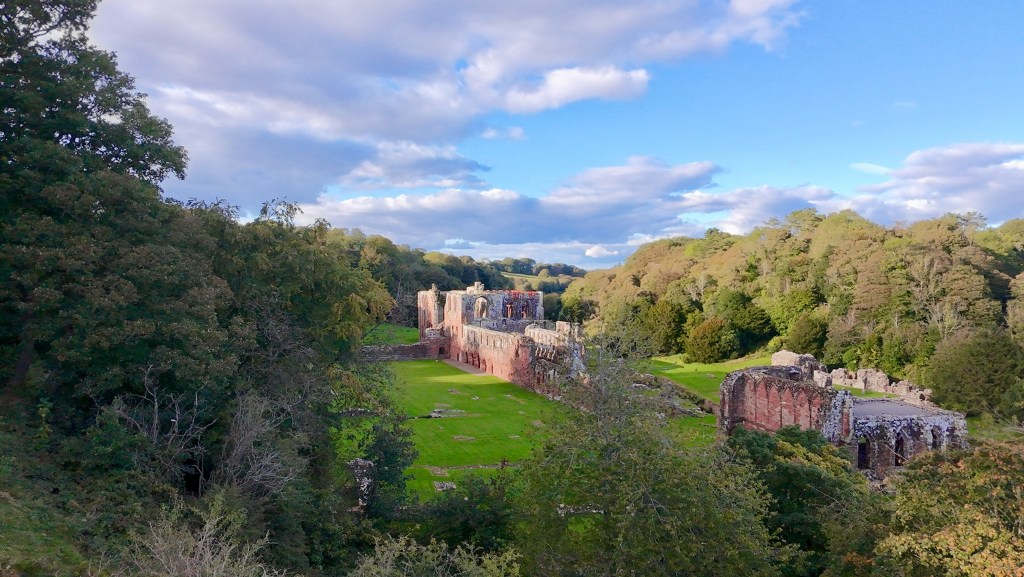
Nestled in the rugged beauty of the Lake District, Furness Abbey is more than just stone and mortar (or, to be precise, sandstone and mortar) it is the beating heart of The Mereland Chronicles: The Crier. Today, its towering arches lie in ruin, its cloisters worn by time are unrecognisable, but for Henry, our fictitious monk, the Abbey was once a place of wealth, duty, learning, and ultimately, heartbreak.
A Glimpse into History
Founded in 1123 by the powerful Savigniac monks and later absorbed into the Cistercian order, Furness Abbey grew to become one of the wealthiest monasteries in England, though not the wealthiest, a point of contention for the ambitious Abbot in our story. Its red sandstone walls have withstood centuries of change, from its humble beginnings to its eventual dissolution under Henry VIII in 1537.
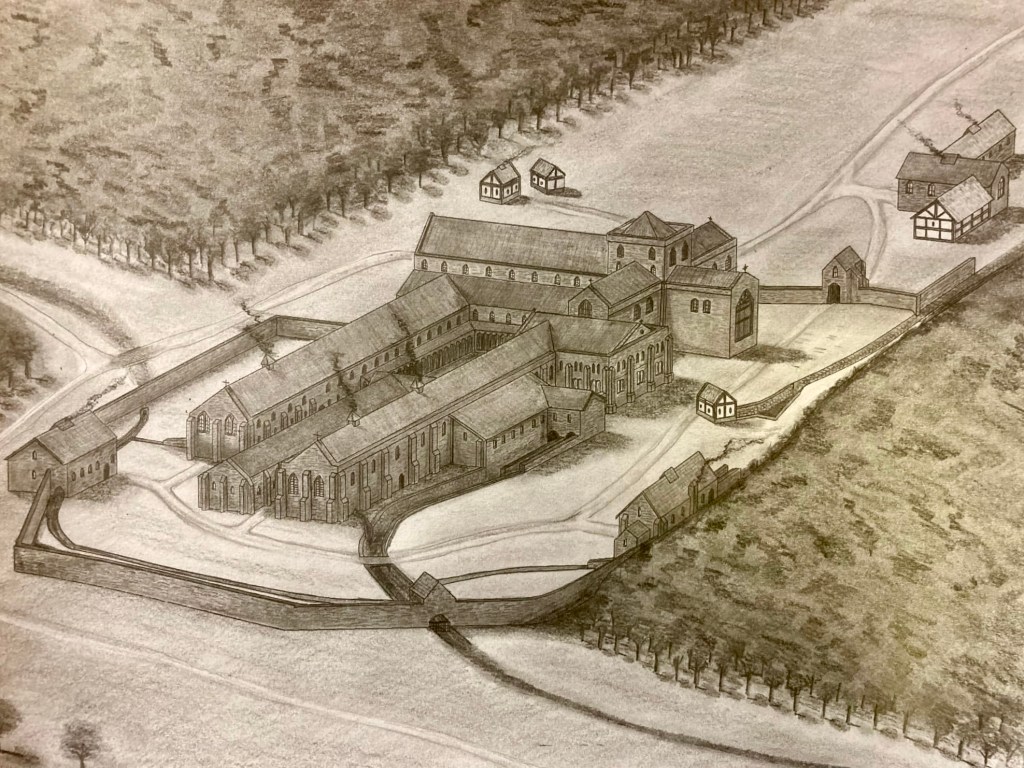
While the ruins today offer only whispers of their former grandeur, their history is preserved in the Abbey’s museum and explored in numerous texts, particularly the exceptional works of Gill Jepson. If you want to delve deeper into Furness Abbey’s past or the surrounding area, her writing is a treasure trove of knowledge. Other sources include English Heritage’s official page on Furness Abbey.
Furness Abbey Through Henry’s Eyes
For Henry, within the universe of The Mereland Chronicles, Furness Abbey is not just a place, it’s a sanctuary and, crucially, a gateway to expanding his worth in a society where education is a privilege reserved for the wealthy and religious orders. Initially, it provided him with an opportunity to learn, study, and better himself in a world where such privileges were rare.
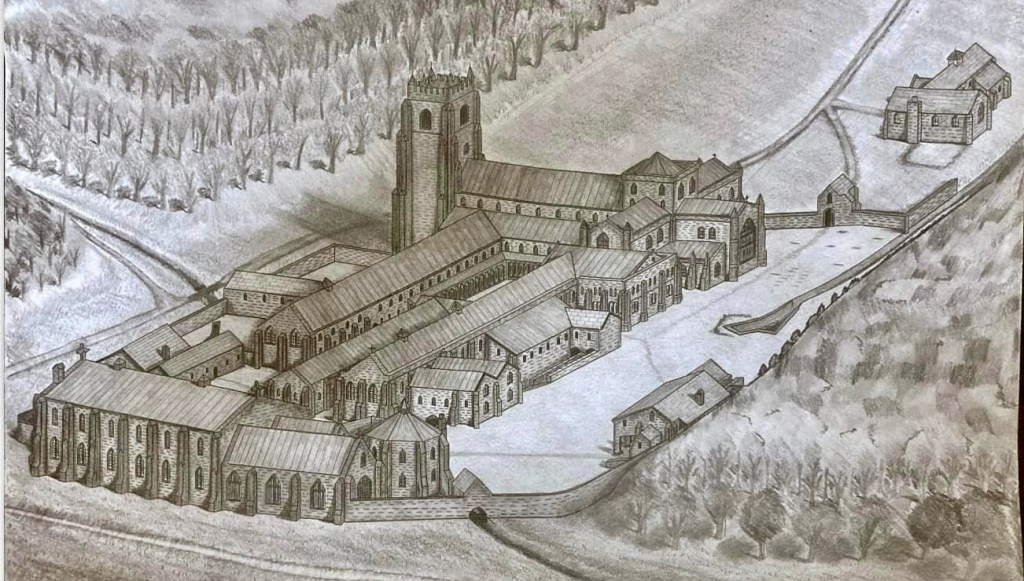
But by the time Hannah enters his life, Henry is no longer the wide-eyed novice monk; he is well-educated, yet stagnating, treading water in a life of routine and obedience.
The Abbey’s walls hold shadows. When Hannah arrives, the sacred spaces that once grounded him become fraught with doubt and longing. What once felt like a refuge begins to feel like a prison, as his growing feelings toward Hannah conflict with the monastic order that once defined him. The very arches that sheltered him now seem to close in, mirroring his inner turmoil.
Furness Abbey is not merely the backdrop for Henry’s story, it’s a character in its own right. My fictional version of the Abbey, with its silent corridors and ancient stones, bears witness to Henry’s transformation – from a devoted monk to a man grappling with love, betrayal, and the weight of his choices.
For Fun: Character Profile – Furness Abbey
Age:
~900 years (Founded in 1123)
Size:
At its height, Furness Abbey controlled vast lands covering around 55,000 acres, including extensive farmland, woodlands, and estates stretching across Cumbria and beyond. The Abbey complex itself spanned several acres, with its grand church, cloisters, chapter house, dormitories, and outbuildings forming a formidable monastic centre.
Build:
Constructed primarily of local red sandstone, quarried from the region, lending it a striking colour that shifts with the light and weather.
Location:
Barrow-in-Furness, Cumbria, England – Nestled in the Vale of Nightshade, surrounded by dense woodland and steeped in both history and legend.
Secrets:
Buried wealth? – Legends whisper of hidden treasures beneath the ruins, from lost monastic riches to long-forgotten tombs. Notably, during conservation work in 2012, the grave of a medieval abbot was discovered, containing a jewelled ring and a silver-gilt crozier, hinting at the Abbey’s historical wealth. (The Guardian)
Rumour of betrayal – Historical records reveal that not all monks were as holy as they appeared. One abbot, for instance, was summoned to court multiple times on charges of fraud, often related to the dishonest seizure of land or fisheries from locals. In one notable dispute with villagers from Sellergarth, the abbot was deposed by his fellow monks but later regained control, imprisoning dissenters and demolishing the village. (Sources: Lancashire Past | English Heritage)
Lingering spirits – Tales of ghostly monks, solemn figures seen walking in the mist, and strange echoes in the cloisters suggest that some of its past residents never truly left. Reports include sightings of a headless monk on horseback and a ‘White Lady’ wandering the grounds. (Sources: Dark Tales | Spooky Isles)
Whispers of underground tunnels – Persistent local rumours suggest a network of hidden tunnels linking Furness Abbey to key locations, including Piel Castle and Dalton Castle. I remember the stories of the tunnels fascinating me as a child, the idea that beneath the Abbey lay forgotten passageways, once used for secret escapes, smuggling, or even hidden treasures. Whether truth or folklore, these tales continue to fuel speculation about what might still lie beneath the ruins.
While no definitive evidence has been found, local legends continue to circulate, with some accounts suggesting that the tunnels were used by monks for escape routes or secret transport. These stories have inspired countless explorations, fictional works, and historical speculation, including The Mereland Chronicles, where the Abbey’s secrets play a key role in Henry’s journey.
For more on these fascinating local legends:
The Mereland Chronicles: The Crier – Coming 2025 – See here for latest news.
✨ Watch out for pre-orders in the coming months – don’t miss out! ✨
Stay connected for more insights into the characters and world of The Mereland Chronicles. Sign up for my newsletter (see below) and follow me on social media – links are here:
Twitter (X) | Instagram | Facebook |BlueSky | Threads
 PJ Scribbans Author